
How Often Should Industrial Storage Tanks Be
Industrial storage tanks are critical assets in the oil and gas, petrochemical, manufacturing, and energy sectors. They are used to store crude oil, refined petroleum products, chemicals, water, and other industrial liquids. Over time, sludge, sediments, rust, water, wax, and other contaminants accumulate inside these tanks, reducing storage capacity, affecting product quality, and increasing operational risks.
One of the most common questions facility managers ask is: How often should industrial storage tanks be cleaned? The answer depends on several factors, including the type of product stored, the operating environment, regulatory requirements, and the condition of the tank.
Routine tank cleaning is essential for maintaining operational efficiency, protecting valuable assets, and ensuring compliance with industry standards. At New Birth Group, we provide professional industrial tank cleaning services that help organizations maintain safe, reliable, and efficient storage systems across Nigeria.
Why Is Tank Cleaning Important?
Industrial storage tanks naturally accumulate contaminants during normal operations. If left untreated, these deposits can reduce storage efficiency, contaminate stored products, accelerate corrosion, and increase maintenance costs.
Regular tank cleaning helps to:
- Maintain product quality
- Improve storage capacity
- Prevent sludge buildup
- Reduce corrosion
- Improve operational efficiency
- Extend tank lifespan
- Support accurate tank inspections and calibration
- Enhance workplace safety
- Meet regulatory and environmental requirements
Cleaning should be considered an important part of every facility’s preventive maintenance program.
How Often Should Industrial Storage Tanks Be Cleaned?
There is no single cleaning schedule that applies to every storage tank. The appropriate cleaning frequency depends on several operational factors.
Crude Oil Storage Tanks
Crude oil tanks often accumulate wax, sludge, water, and sediments that settle over time. These tanks are typically inspected regularly, with cleaning scheduled whenever sludge buildup begins to affect storage efficiency, inspection requirements, or maintenance activities.
Refined Petroleum Product Tanks
Diesel, petrol, aviation fuel, and kerosene storage tanks generally accumulate fewer heavy deposits than crude oil tanks. However, periodic cleaning remains important to maintain fuel quality and prevent contamination.
Chemical Storage Tanks
Chemical tanks require cleaning whenever product changes occur, contamination is detected, maintenance is planned, or regulatory requirements specify cleaning intervals.
Water Storage Tanks
Industrial water storage tanks should be cleaned periodically to remove sediments, biological growth, and contaminants that may affect water quality and equipment performance.
Rather than relying on a fixed calendar schedule, organizations should base cleaning decisions on inspections, operational performance, product quality, and maintenance planning.
Factors That Affect Cleaning Frequency
Type of Stored Product
Different products produce different levels of residue. Heavy crude oil generates more sludge than refined fuels, while some chemicals require more frequent cleaning to prevent contamination.
Tank Size and Usage
Large storage tanks used continuously may accumulate deposits more quickly than smaller or less frequently used tanks.
Operating Conditions
Temperature, humidity, production rates, and environmental conditions all influence how quickly contaminants accumulate inside storage tanks.
Regulatory Requirements
Some industries require periodic tank inspections and maintenance to comply with environmental, safety, and operational regulations.
Cleaning is often performed before mandatory inspections or maintenance activities.
Product Quality Requirements
Facilities storing high-value or sensitive products often clean tanks more frequently to maintain product purity and prevent contamination.
Signs That a Storage Tank Needs Cleaning
Regardless of the maintenance schedule, tanks should be inspected regularly for signs that cleaning may be necessary.
Common indicators include:
- Excessive sludge accumulation
- Water contamination
- Reduced storage capacity
- Unusual odors
- Product contamination
- Visible corrosion
- Sediment buildup
- Reduced pumping efficiency
- Difficulties during tank inspection
- Increased maintenance requirements
Ignoring these warning signs can result in equipment damage, production losses, and higher maintenance costs.
The Industrial Tank Cleaning Process
Professional tank cleaning follows a structured process to ensure safety and efficiency.
Inspection and Planning
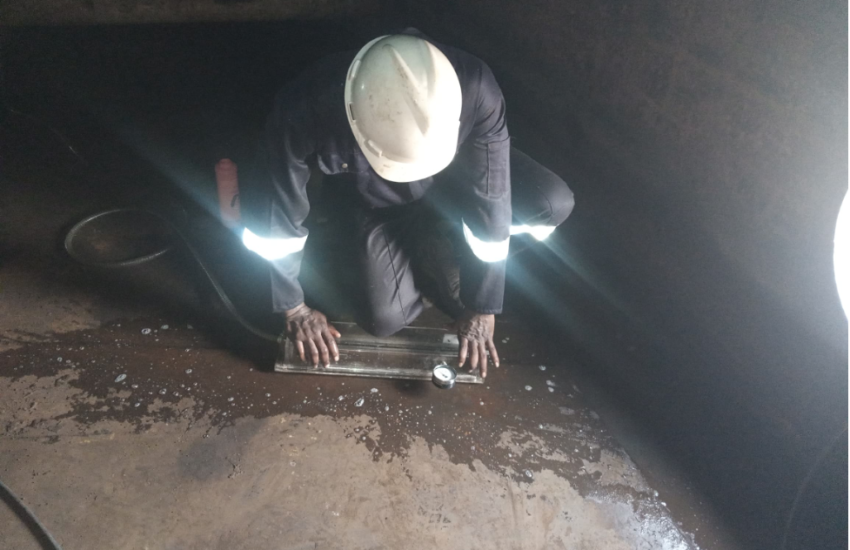
The tank is inspected to assess sludge levels, contamination, structural condition, and cleaning requirements. A project-specific work plan and risk assessment are prepared before work begins.
Tank Isolation
The tank is safely isolated and prepared for cleaning in accordance with Health, Safety, and Environmental (HSE) procedures.
Sludge Removal
Accumulated sludge, sediments, hydrocarbons, and contaminants are removed using specialized equipment.
Internal Cleaning
The tank interior is thoroughly cleaned to remove remaining residues, scale, and contaminants.
Inspection and Maintenance
Following cleaning, the tank can be inspected, calibrated, repaired, or maintained before being returned to service.
Waste Management
All waste generated during the cleaning process is collected, transported, and disposed of responsibly in accordance with applicable environmental regulations.
Benefits of Professional Tank Cleaning
Organizations that invest in professional tank cleaning experience several operational advantages, including:
- Improved equipment reliability
- Increased storage efficiency
- Better product quality
- Reduced maintenance costs
- Longer asset lifespan
- Improved workplace safety
- Easier inspections and repairs
- Enhanced environmental compliance
- Reduced operational downtime
- Greater operational efficiency
Why Choose Professional Tank Cleaning?
Industrial storage tanks often contain hazardous materials and confined spaces that require specialized expertise.
Professional service providers offer:
- Experienced personnel
- Modern cleaning equipment
- Confined space entry expertise
- HSE-compliant procedures
- Proper waste management
- Efficient project execution
- Quality assurance
- Reduced operational risk
Choosing an experienced contractor helps ensure that cleaning activities are completed safely and effectively.
Why Choose New Birth Group?
New Birth Group provides professional industrial tank cleaning services for clients across Nigeria’s oil and gas, petrochemical, manufacturing, and energy industries.
Our capabilities include:
- Crude oil tank cleaning
- Product storage tank cleaning
- Tank sludge removal
- Tank calibration support
- Tank inspection preparation
- Industrial waste management
- Environmental management
- Tank maintenance services
- Flow station support
- Refinery maintenance solutions
Our experienced engineers and technicians deliver safe, efficient, and reliable cleaning services that support operational excellence and regulatory compliance.
Conclusion
Industrial storage tanks should be cleaned based on their operating conditions, inspection findings, product type, and maintenance requirements rather than a fixed timetable. Regular inspections and preventive maintenance help organizations determine the right cleaning schedule while minimizing operational risks and maximizing equipment performance.
Professional tank cleaning protects valuable assets, improves storage efficiency, maintains product quality, and supports safe industrial operations.
If your facility requires expert tank cleaning, sludge removal, or industrial maintenance services, New Birth Group has the expertise, equipment, and experience to deliver dependable solutions tailored to your operational needs.
Contact New Birth Group today to discuss your tank cleaning requirements and learn how our industrial maintenance services can support your operations.
Tree plantation for human
Competently cultivate worldwide to e-tailers professionally engineer highIt is a long established fact that a reader will be distracted by the readable content of a page when looking at its layout. The point of using Lorem Ipsum is that it has a more-or-less normal distribution of letters,
